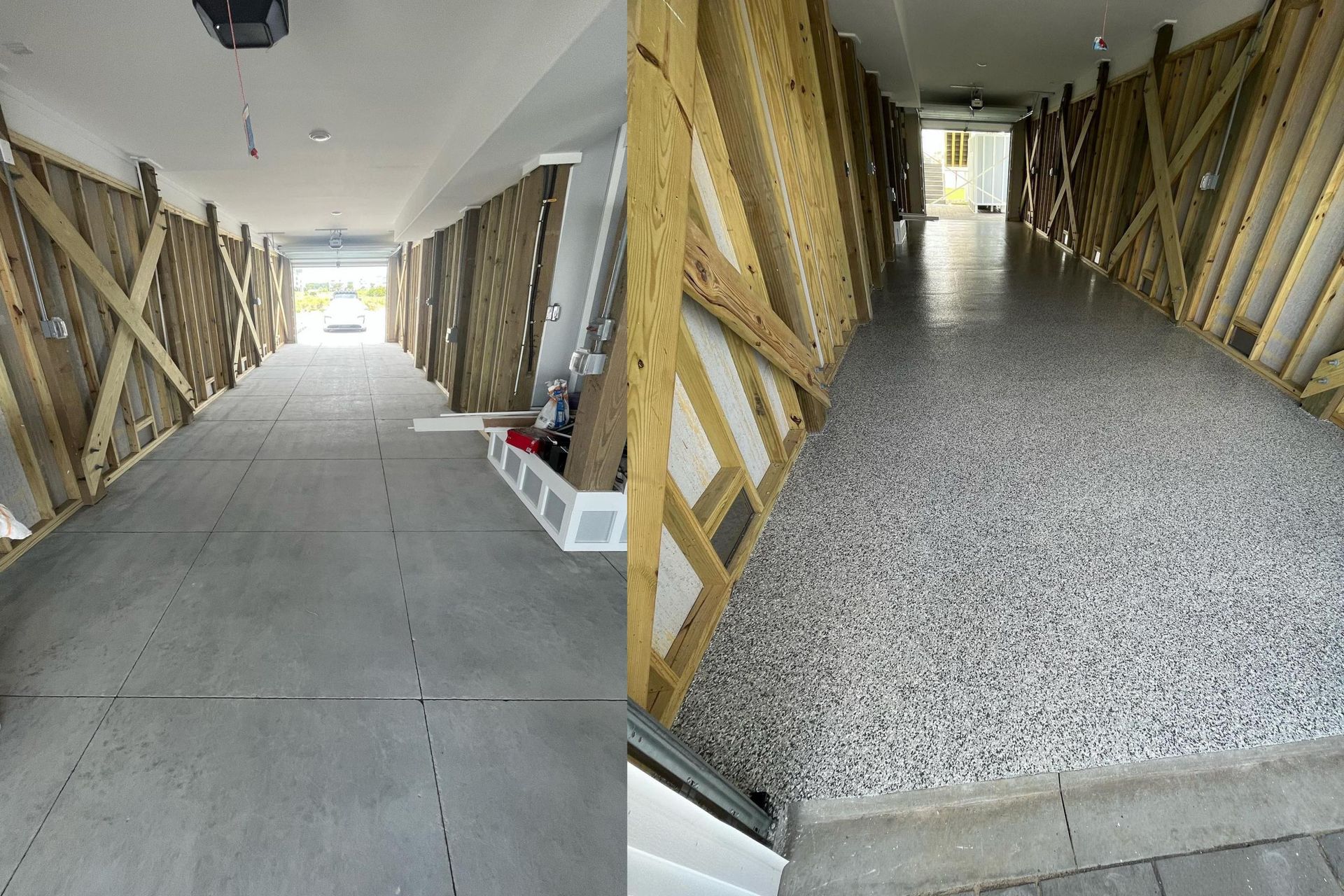
Industrial Epoxy Flooring for Warehouses: Built to Withstand Real-World Abuse
A High-Performance Flooring Solution for Heavy Traffic, Equipment, and Chemical Exposure
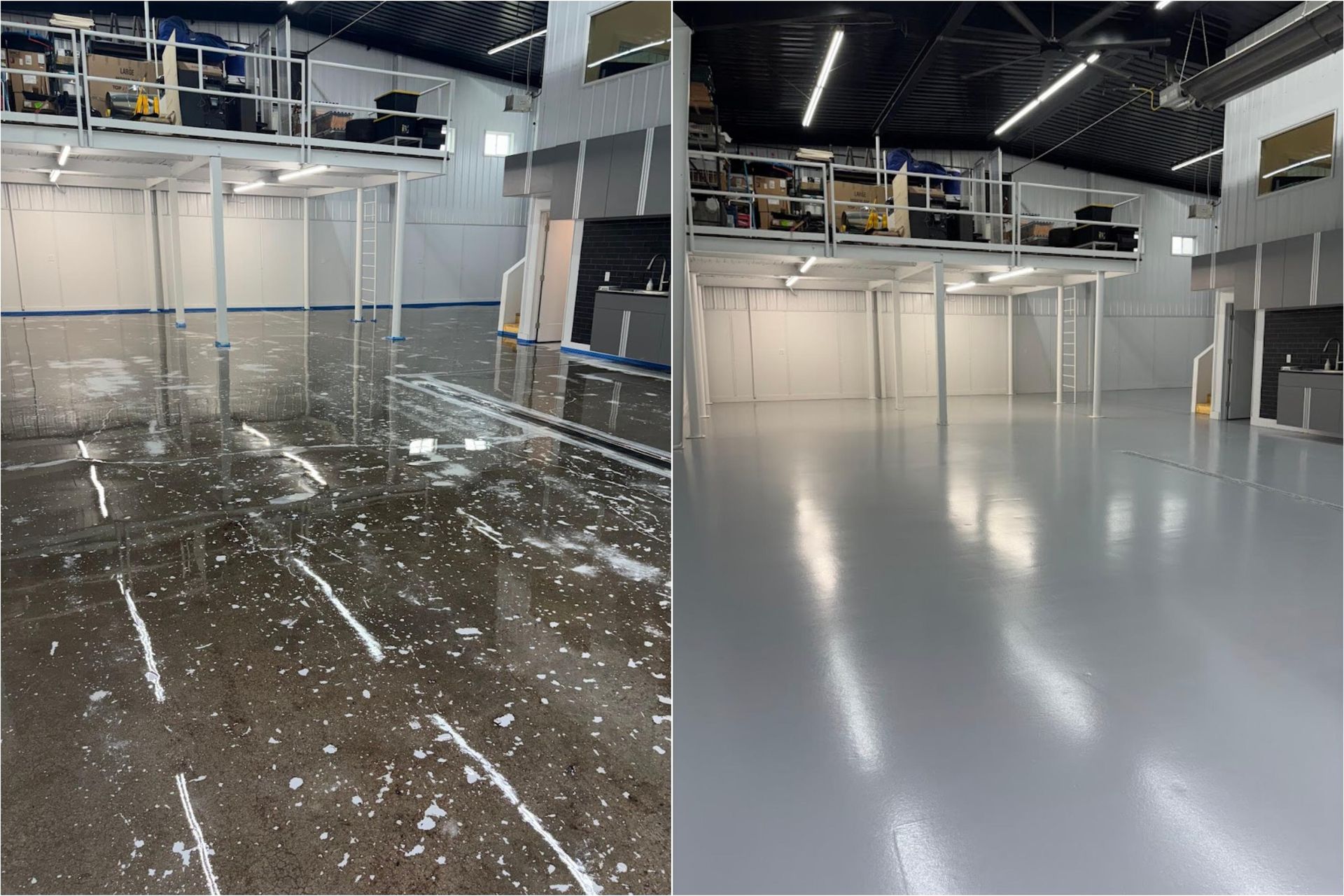
Warehouse floors are subjected to some of the harshest conditions in any commercial environment. From constant forklift traffic and heavy pallet loads to chemical spills and moisture intrusion, standard concrete floors often deteriorate quickly. Cracking, surface divots, dusting, and moisture-related failures can lead to safety risks, higher maintenance costs, and operational disruptions.
This is where industrial epoxy flooring systems provide a long-term, high-performance solution.
Why Warehouse Floors Fail Without the Right System
Bare or poorly coated concrete is not designed to handle sustained industrial abuse. Over time, warehouses commonly experience:
- Surface wear from forklifts and pallet jacks
- Concrete divots and impact damage
- Moisture vapor transmission causing coating failure
- Chemical staining and breakdown
- Dusting that affects cleanliness and air quality
Without proper surface preparation and a multi-layer industrial system, even new floors can fail prematurely.
The Industrial Epoxy Flooring Process
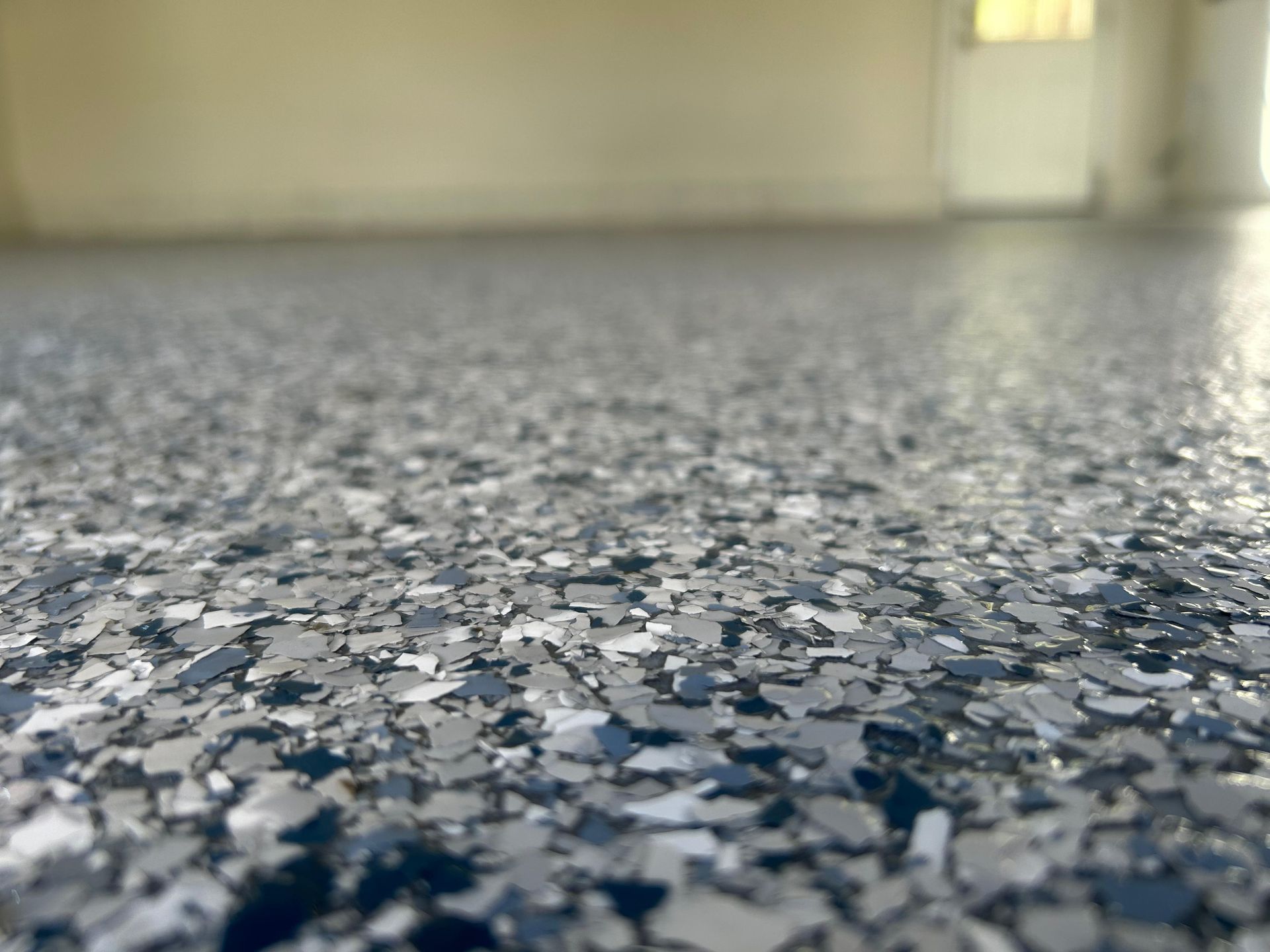
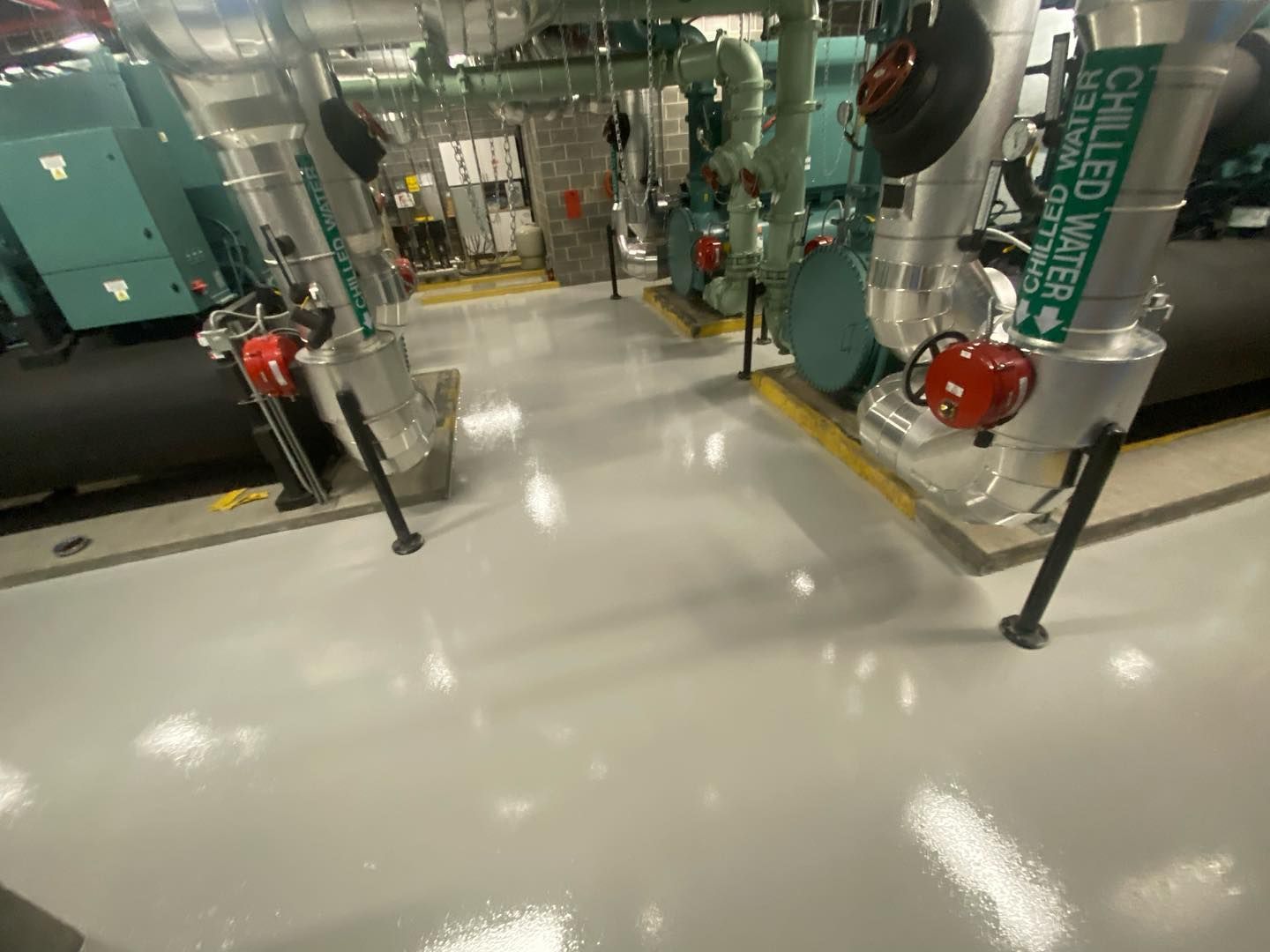
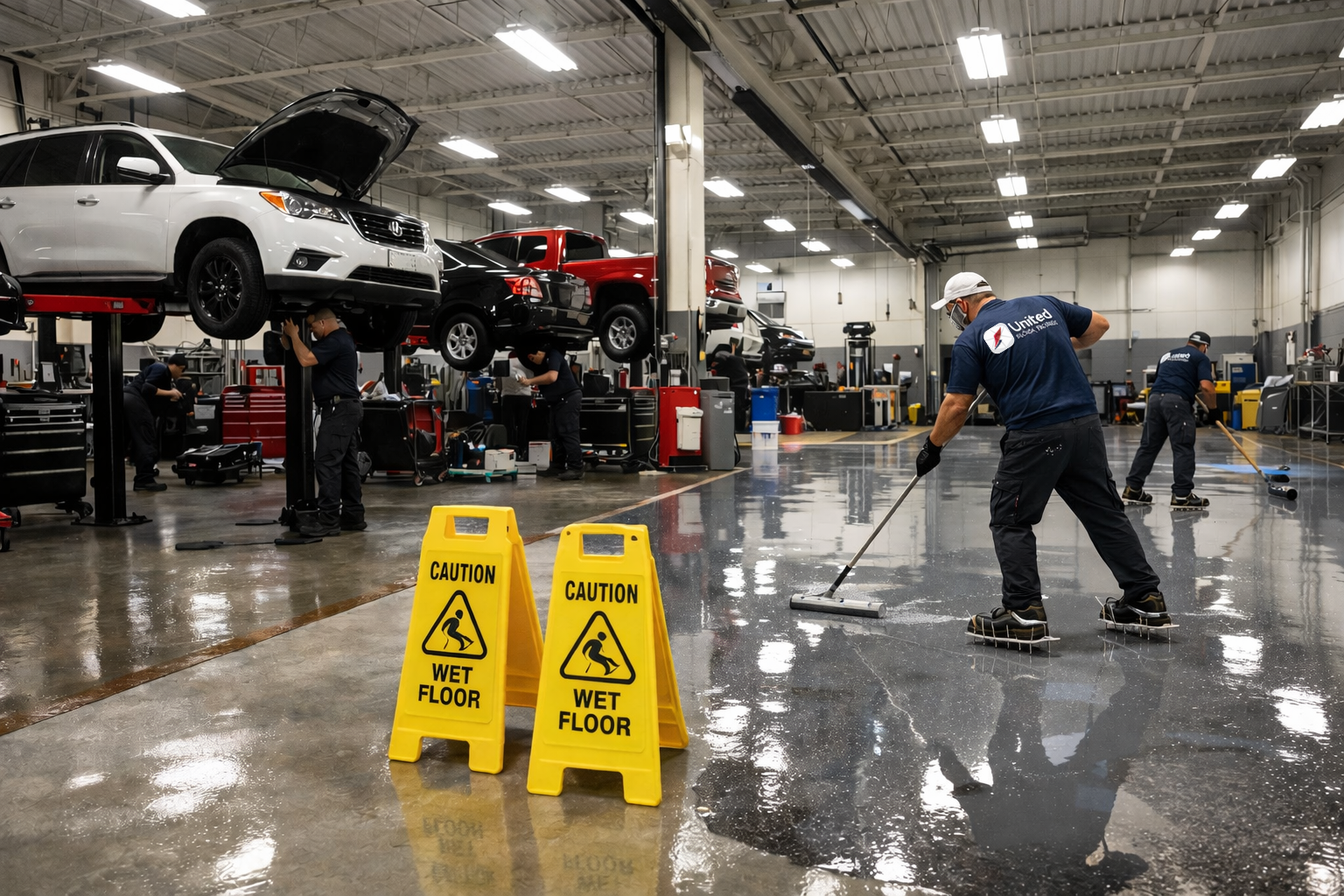
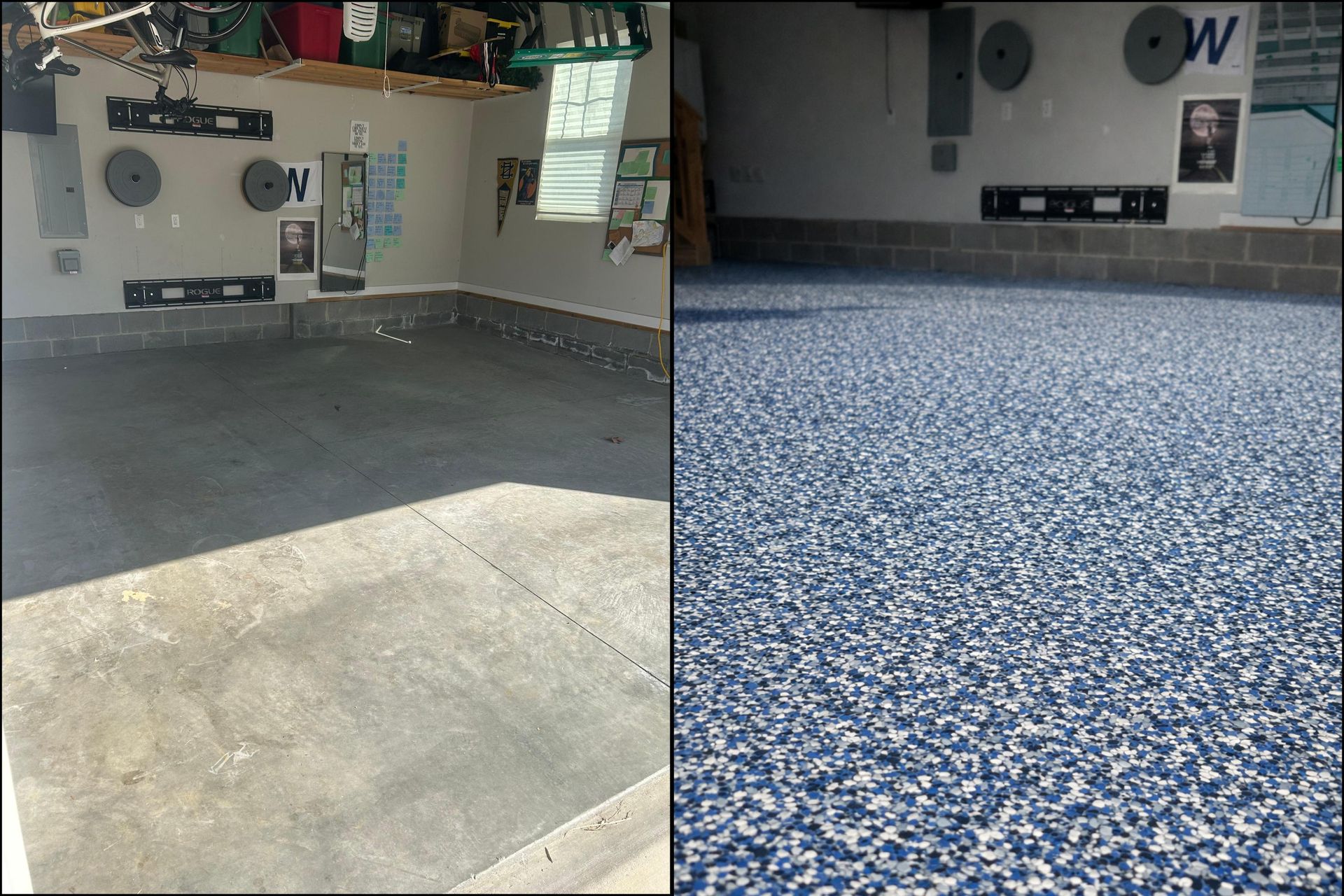
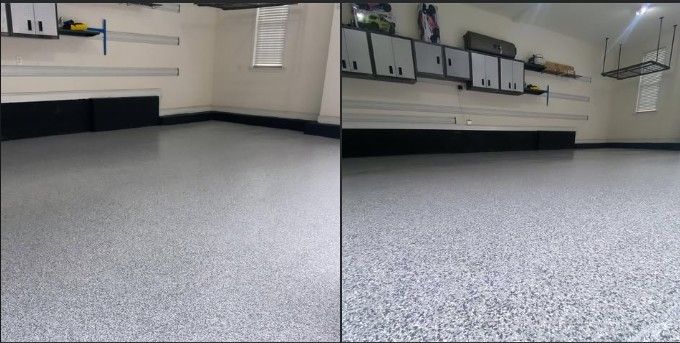
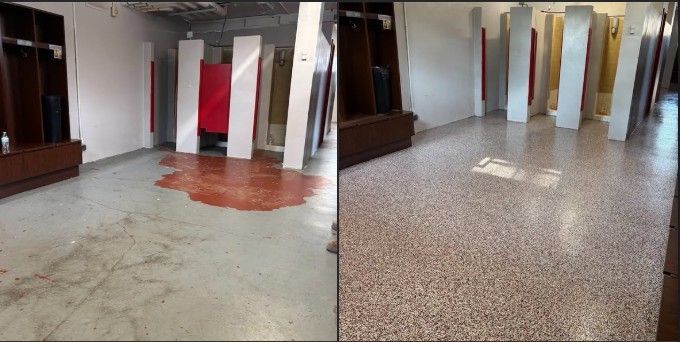
A true warehouse-grade epoxy floor is more than just a single coating. It’s a system, engineered to protect the concrete slab and extend its service life.
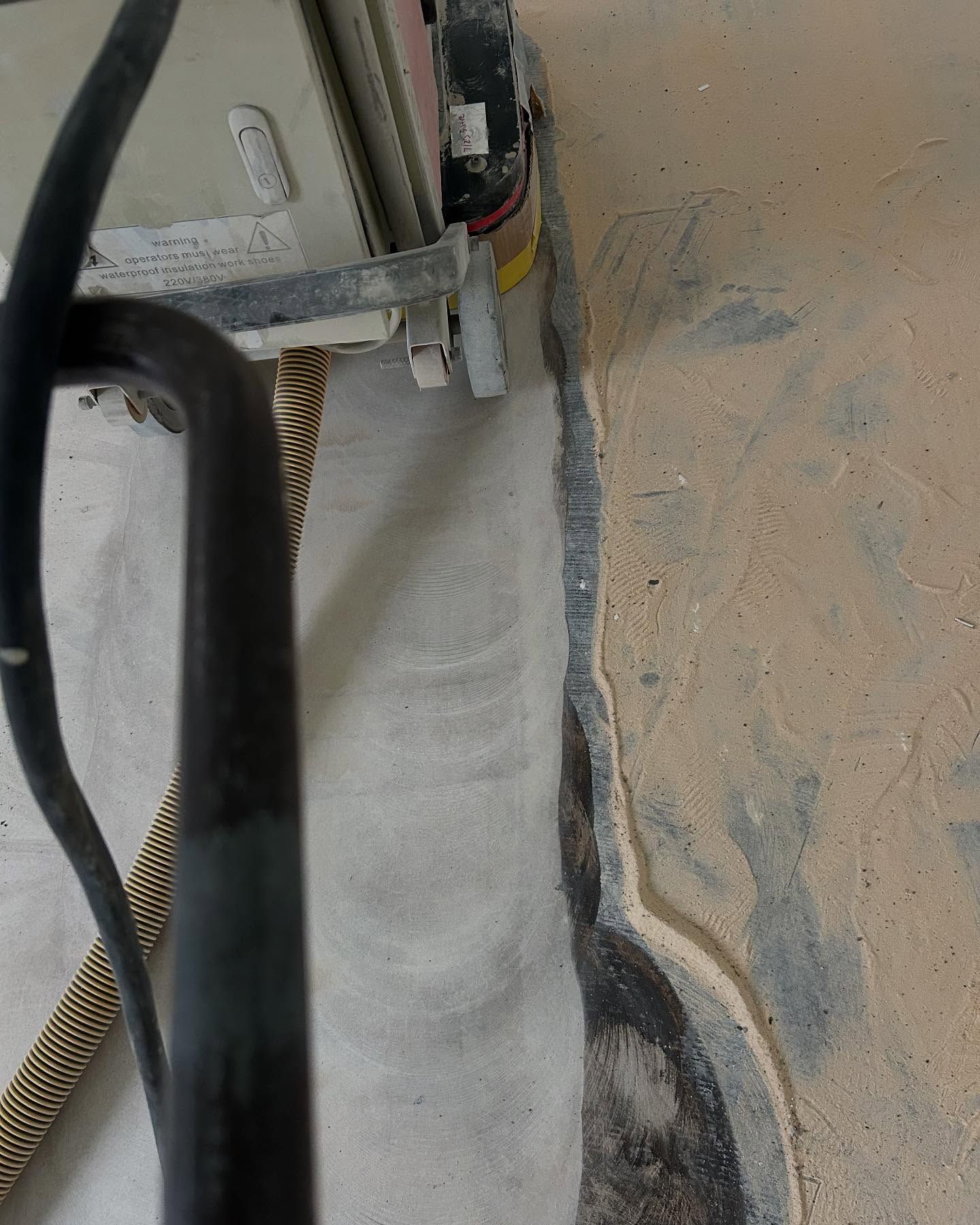
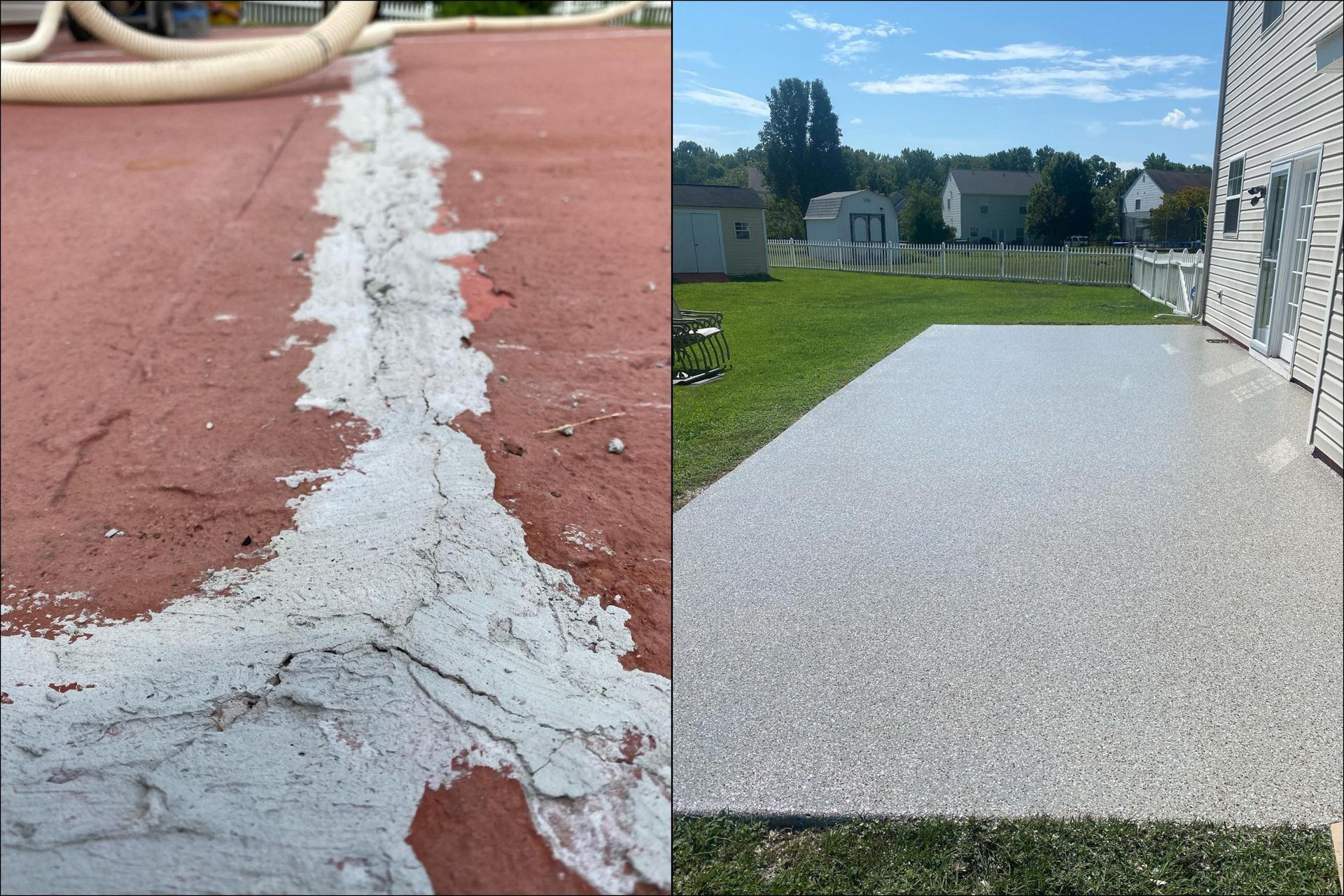
1. Concrete Repair & Surface Preparation
Before any coating is applied, damaged concrete must be addressed. This often includes repairing thousands of divots, cracks, and surface imperfections to restore slab integrity. Proper mechanical preparation ensures strong adhesion and long-term performance.
2. Moisture Vapor Barrier Epoxy Basecoat
Moisture is one of the leading causes of epoxy floor failure. A moisture vapor barrier epoxy blocks vapor transmission from below the slab, preventing delamination, bubbling, and peeling.
3. High-Build Industrial Epoxy
A high-build epoxy layer creates thickness, strength, and impact resistance. This layer is engineered to withstand heavy equipment, rolling loads, and continuous traffic without wearing down.
4. Polyester Urethane Topcoat
To finish the system, a polyester urethane topcoat is applied for maximum abrasion and chemical resistance. This topcoat protects the epoxy beneath it while creating a seamless, easy-to-clean surface.
Benefits of Industrial Epoxy Flooring for Warehouses
- Extreme durability for forklifts and heavy machinery
- Chemical and abrasion resistance
- Seamless, non-porous surface for easy maintenance
- Improved safety with optional slip-resistant textures
- Long-term cost savings through reduced repairs and downtime
Is Industrial Epoxy Right for Your Facility?
If your warehouse experiences heavy traffic, frequent wear, or ongoing concrete issues, an industrial epoxy flooring system may be the most reliable solution. The right system not only protects your floor—but supports safer, more efficient operations.
Ready to Upgrade Your Warehouse Floor?
If you’re dealing with failing concrete, moisture issues, or floors that can’t keep up with daily abuse, it’s time to consider a professional industrial epoxy flooring system.
👉 Schedule a free on-site evaluation today to determine the best solution for your warehouse or industrial facility.