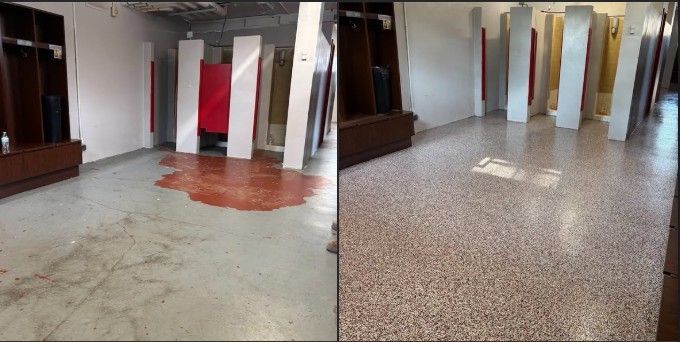
Restoring a Damaged Two-Car Garage Floor to Like-New Condition
How Professional Repair, Crack Restoration, and Polyaspartic Coatings Deliver Lasting Durability
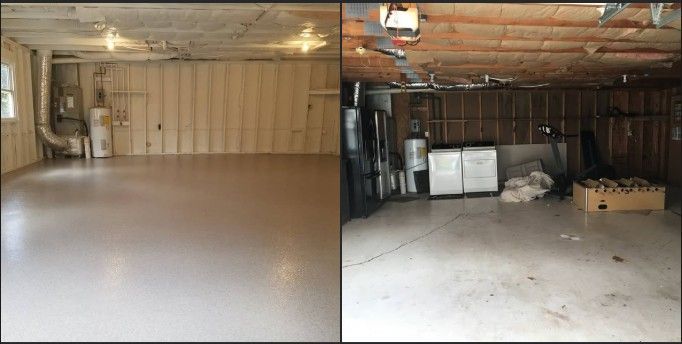
A garage floor takes more abuse than almost any other surface in a home. Between fluctuating temperatures, moisture, heavy vehicles, and day-to-day wear, it’s common for concrete to develop cracking and surface failure over time. But when existing damage goes untreated—or when a low-quality DIY epoxy is applied over structural issues—the results can be even worse.
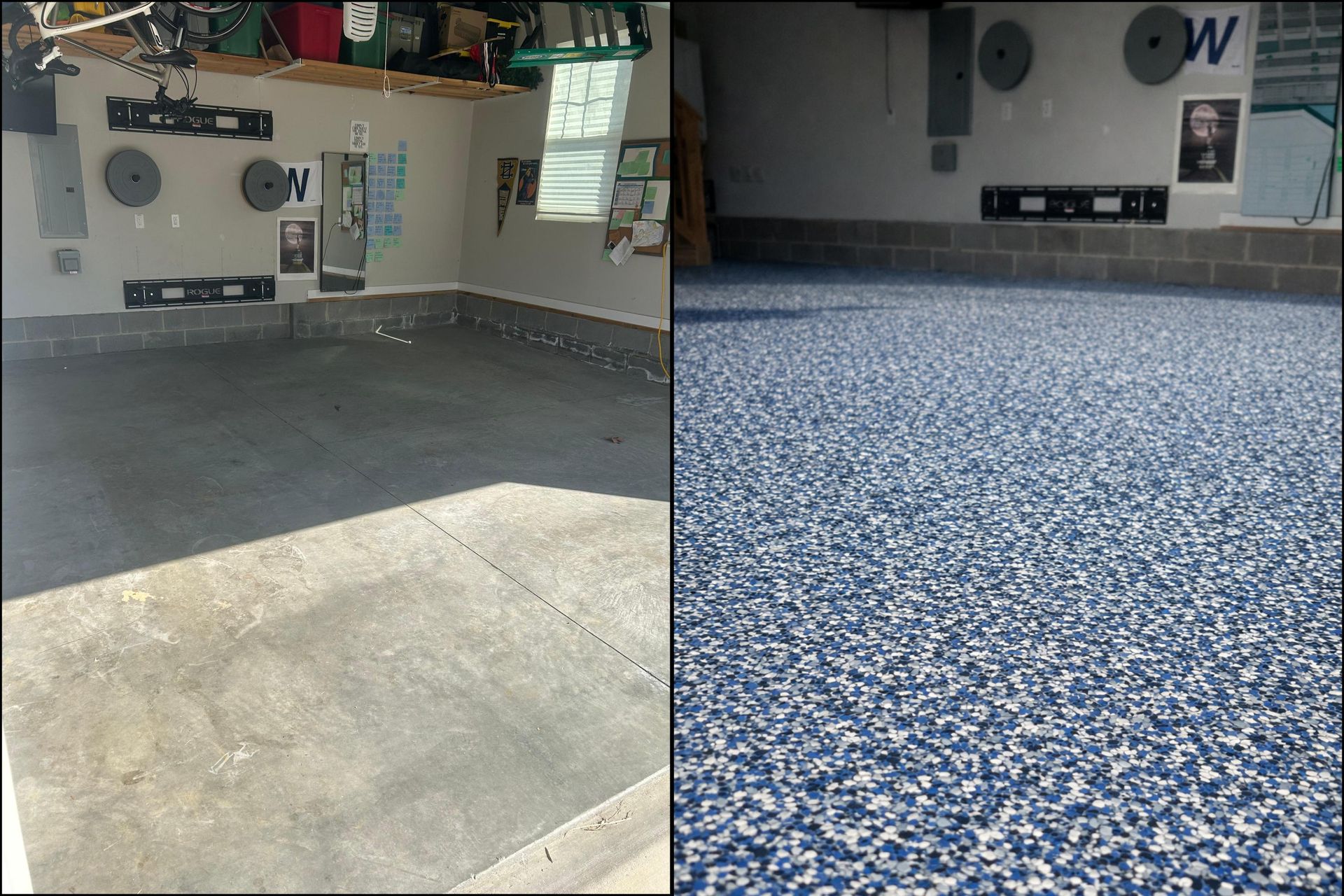
This was exactly the situation in a recent two-car garage project, where the floor had suffered major settling, large structural cracks over an inch wide, and more than 100 linear feet of smaller cracking hidden beneath a failing epoxy coating installed by the previous homeowner. What looked like a cosmetic problem was actually a compromised concrete surface requiring professional repair.
Assessing the Damage: When a Garage Floor Needs More Than a Recoat
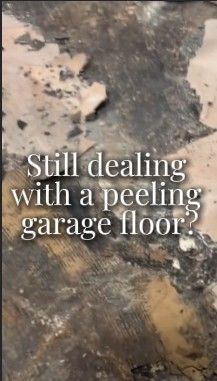
During the initial inspection, it was clear this floor needed more than a simple epoxy refresh. The existing coating was peeling, bubbling, and delaminating. Underneath, the concrete revealed:
- Wide structural cracks caused by significant settling
- Dozens of smaller fractures spreading across the slab
- Moisture intrusion beneath the failing DIY coating
- Uneven texture and weak spots where the old coating had detached
These issues can’t be fixed with a surface-level product. For homeowners considering a floor upgrade, this is where professional preparation becomes essential.
The Restoration Process: Bringing the Surface Back to Life
To deliver a long-lasting, high-performance finish, the floor required a complete restoration. Our specialized process included:
1. Diamond Grinding and Surface Profiling
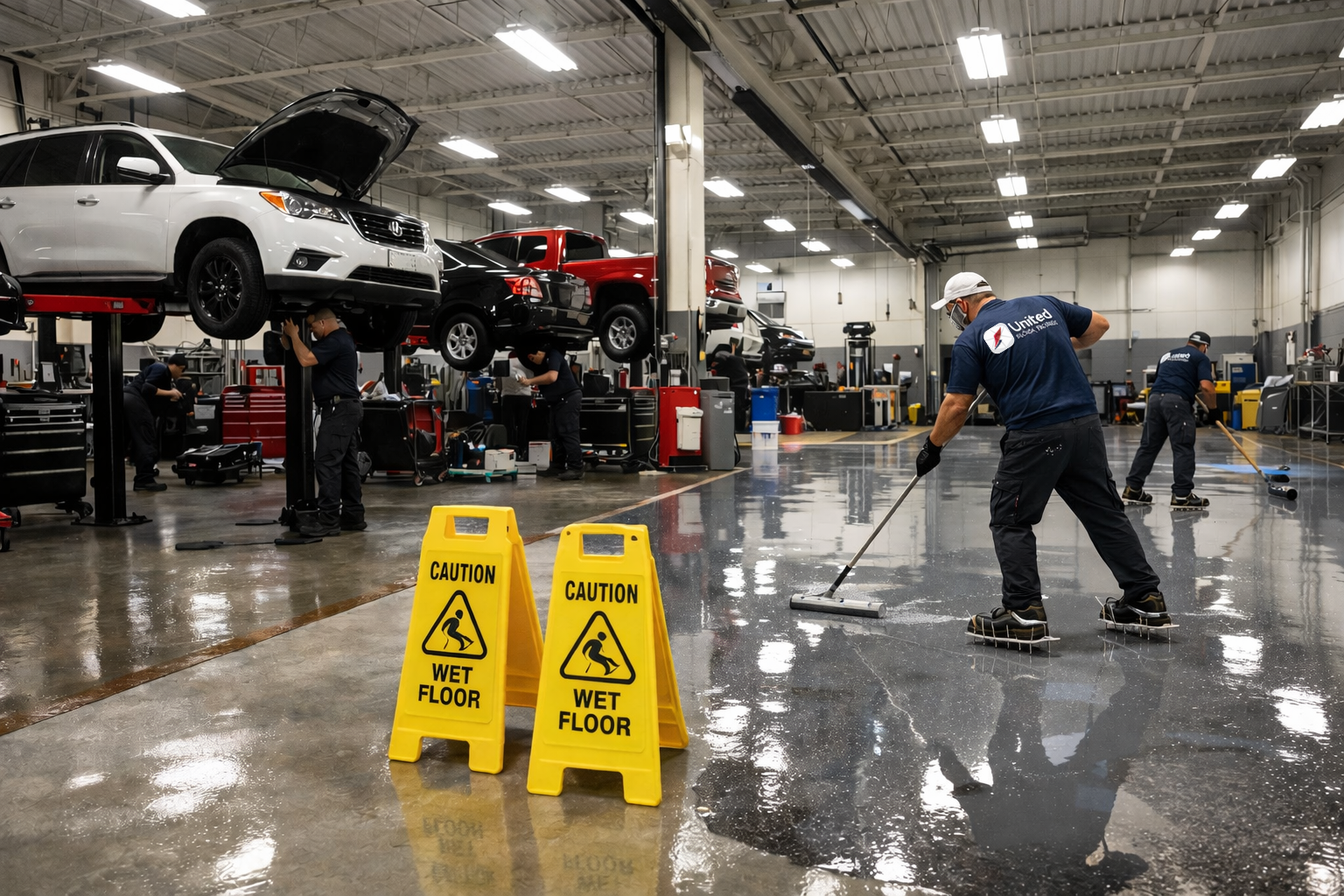
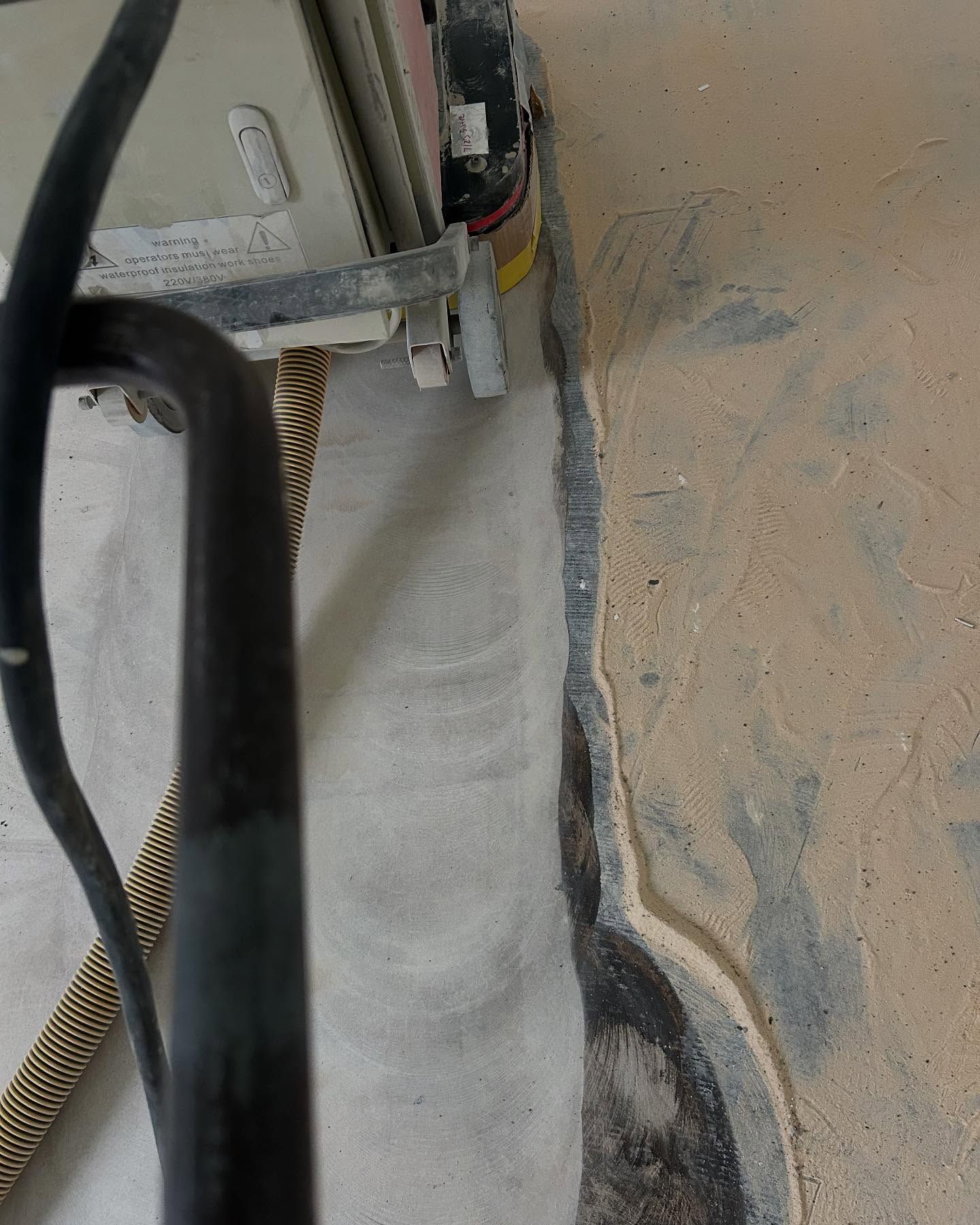
The old epoxy was removed using industrial grinders to expose clean, structurally sound concrete. This step is critical for permanent adhesion, ensuring new coatings bond properly.
2. Structural Crack Repair and Stabilization
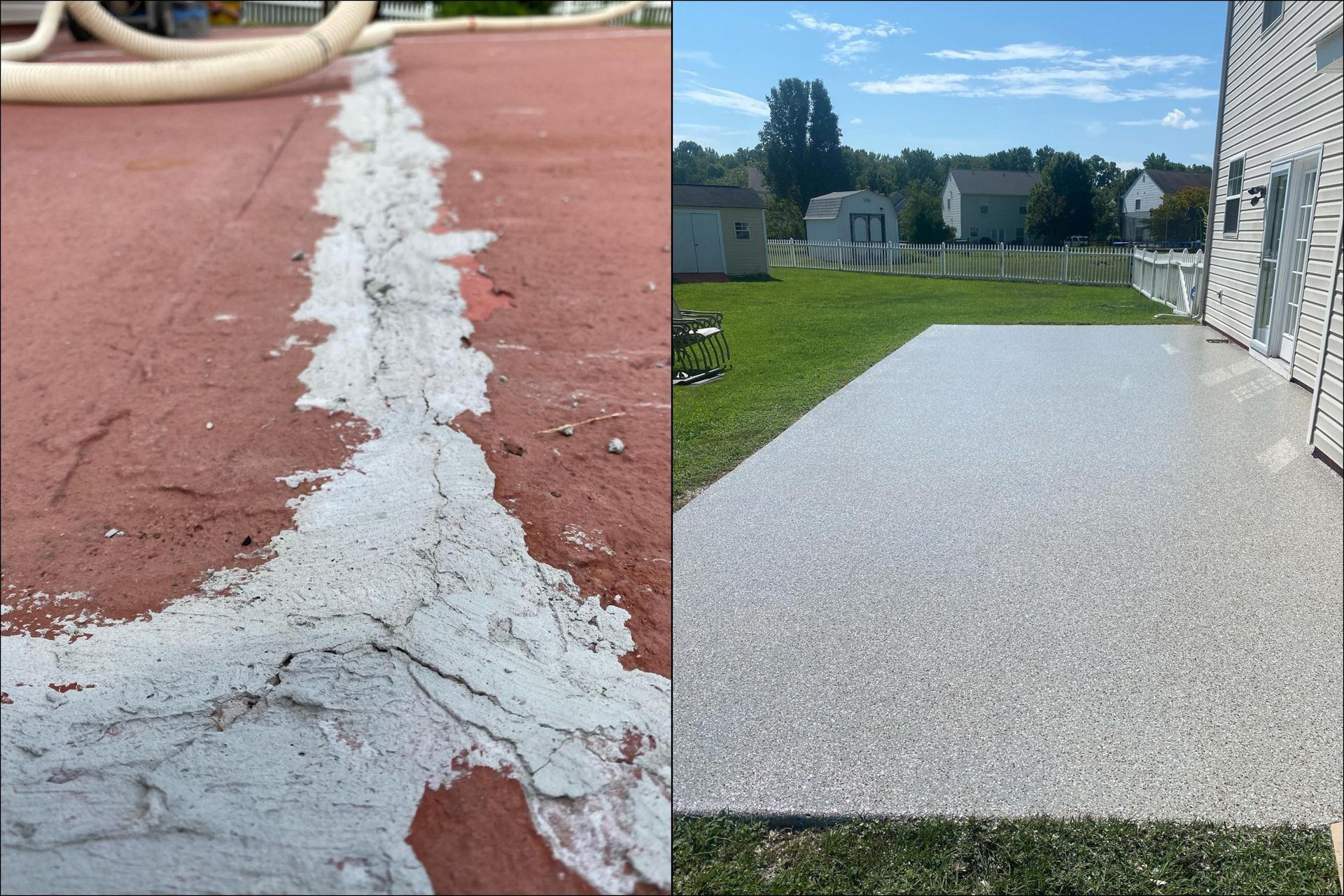
Cracks over an inch wide were routed, cleaned, and filled with industrial repair compounds designed to flex with slab movement. Smaller cracks—over 100 linear feet total—were injected and sealed to prevent future spreading.
3. Seamless Resurfacing and Flake Broadcast
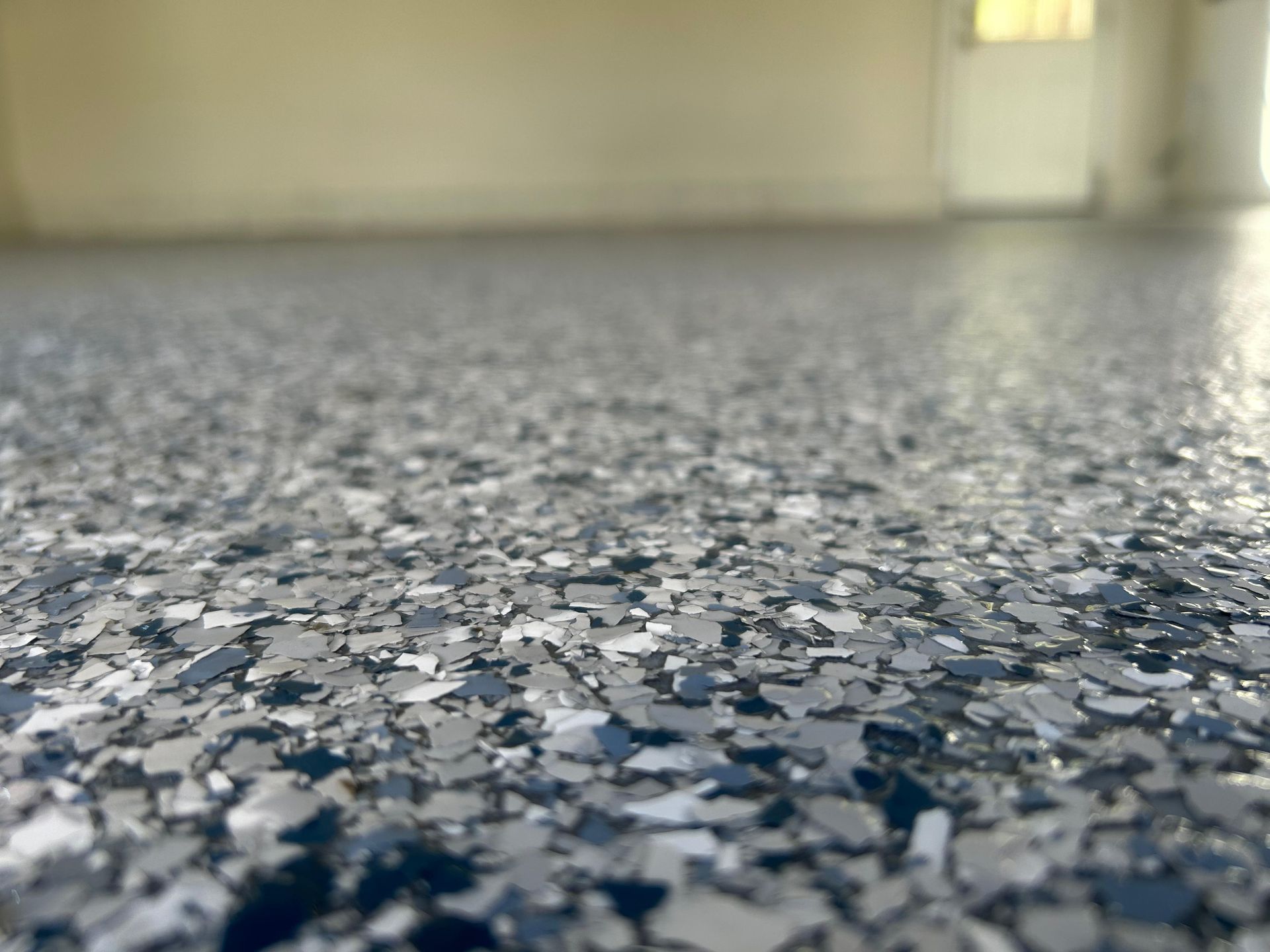
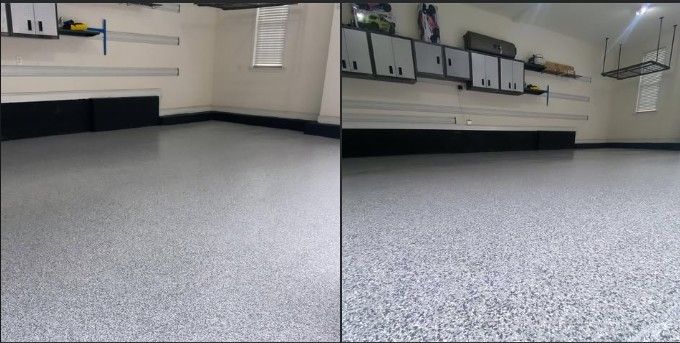
Once the surface was stable and level, the floor received a new high-build coating system and a full vinyl flake broadcast. This creates a uniform, slip-resistant surface that visually hides imperfections and increases durability.
4. Thick-Mil Polyaspartic Topcoat
A commercial-grade polyaspartic topcoat was applied to lock everything in. This finish provides:
- UV stability to prevent yellowing
- Chemical and abrasion resistance
- Fast cure times
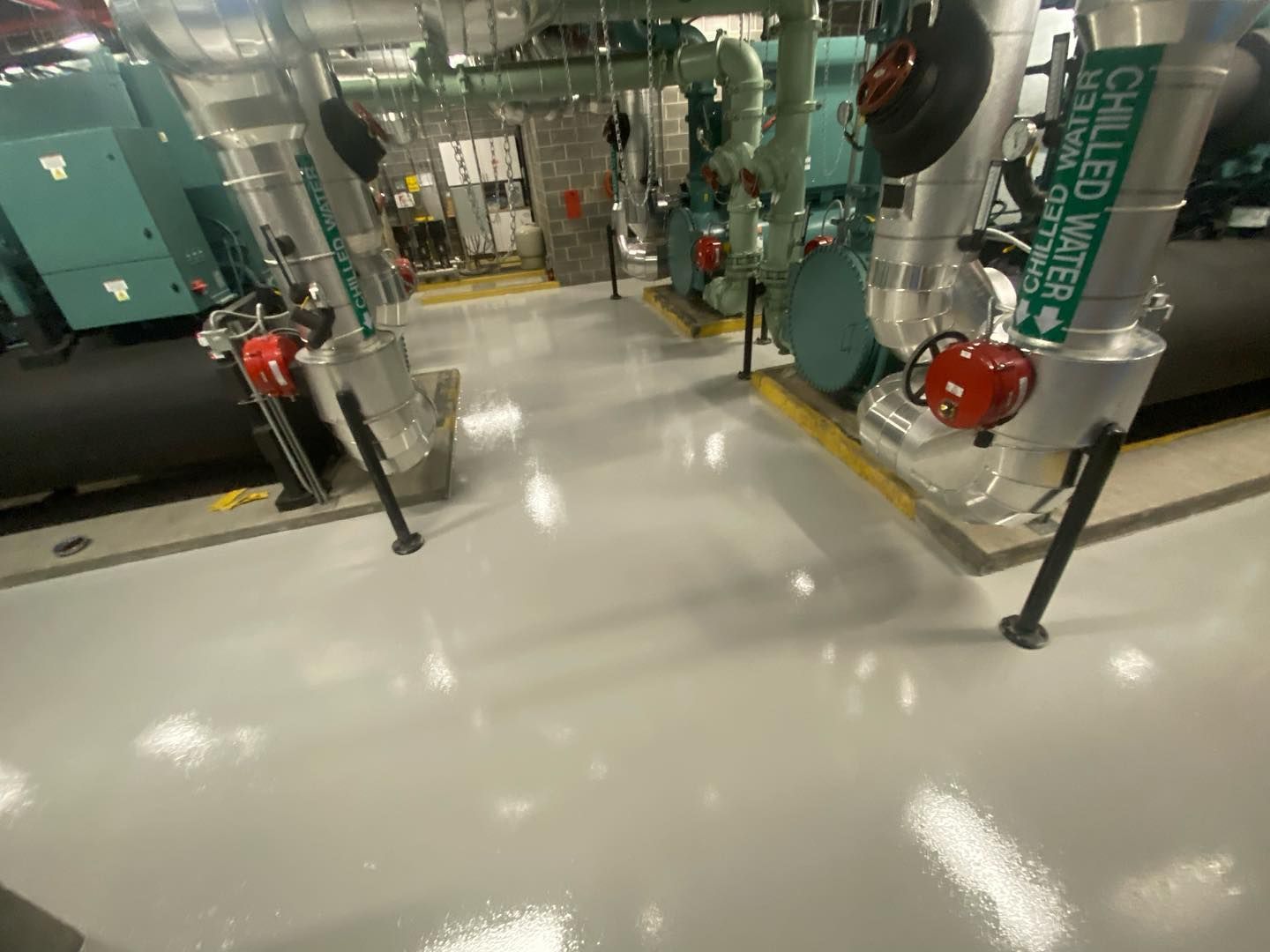
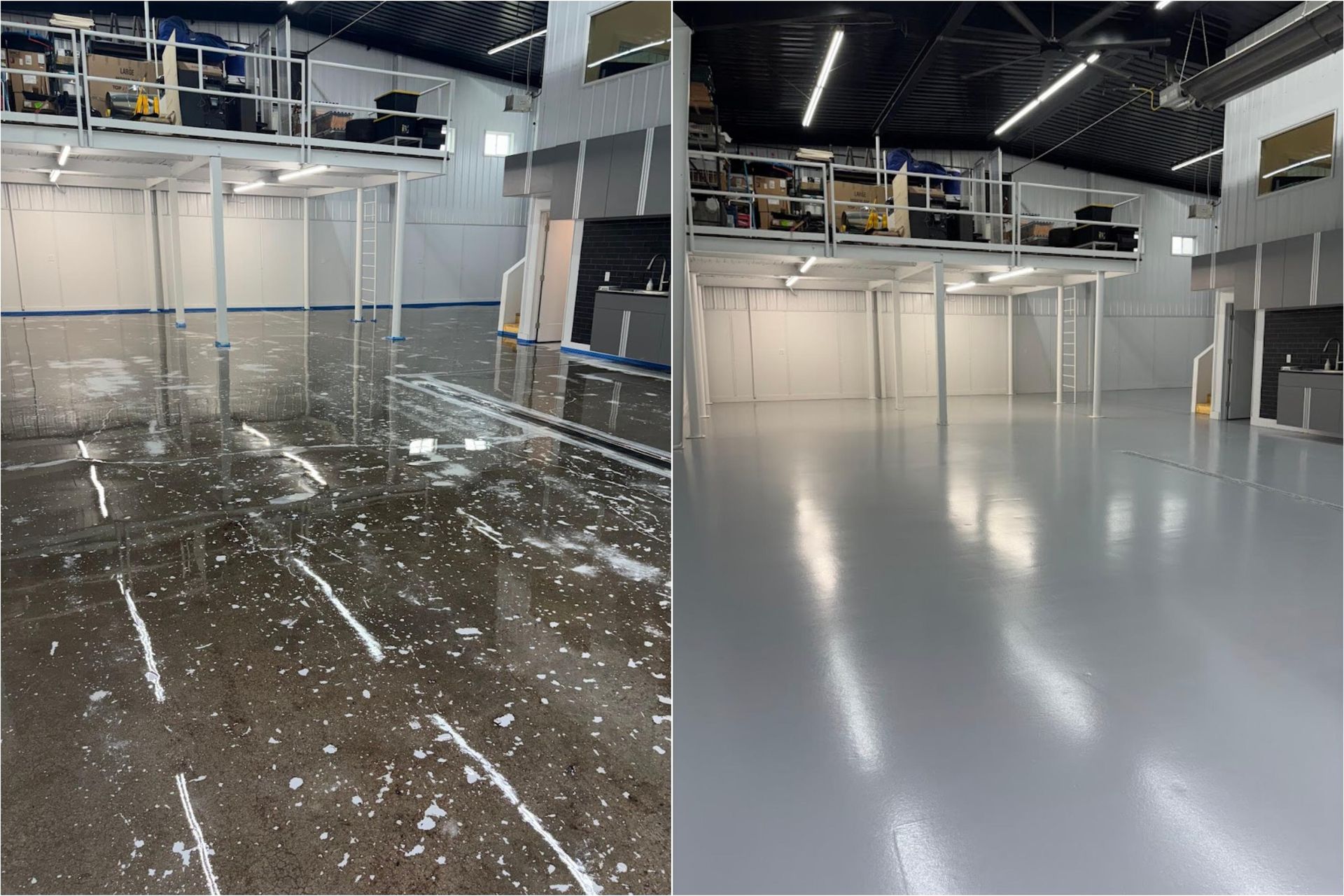
- A smooth, glossy, “like-new” appearance
The transformation was dramatic. The once-damaged garage floor now looks seamless and professionally finished—built to withstand years of use.
Why Polyaspartic Garage Floors Are the Best Long-Term Solution
Compared to DIY epoxy kits, a polyaspartic garage floor provides unmatched durability. Homeowners benefit from:
- Resistance to hot tire pickup
- Protection from oils, fuels, and road salts
- Easy cleaning and low maintenance
- A lifetime-quality, commercial-grade surface
For garages with cracks, uneven slabs, or failed coatings, polyaspartic systems offer the most reliable, long-term solution.
Ready to Restore Your Garage Floor? Let’s Talk.
If your garage has peeling epoxy, visible cracks, or settling issues, professional repair can extend the lifespan of your concrete and dramatically improve your home’s appearance.
United Floor Coatings specializes in repairing, resurfacing, and installing premium polyaspartic garage floors across the Carolinas.
Contact our team today for a free estimate and expert consultation. Your garage can look new again—and stay that way for years.