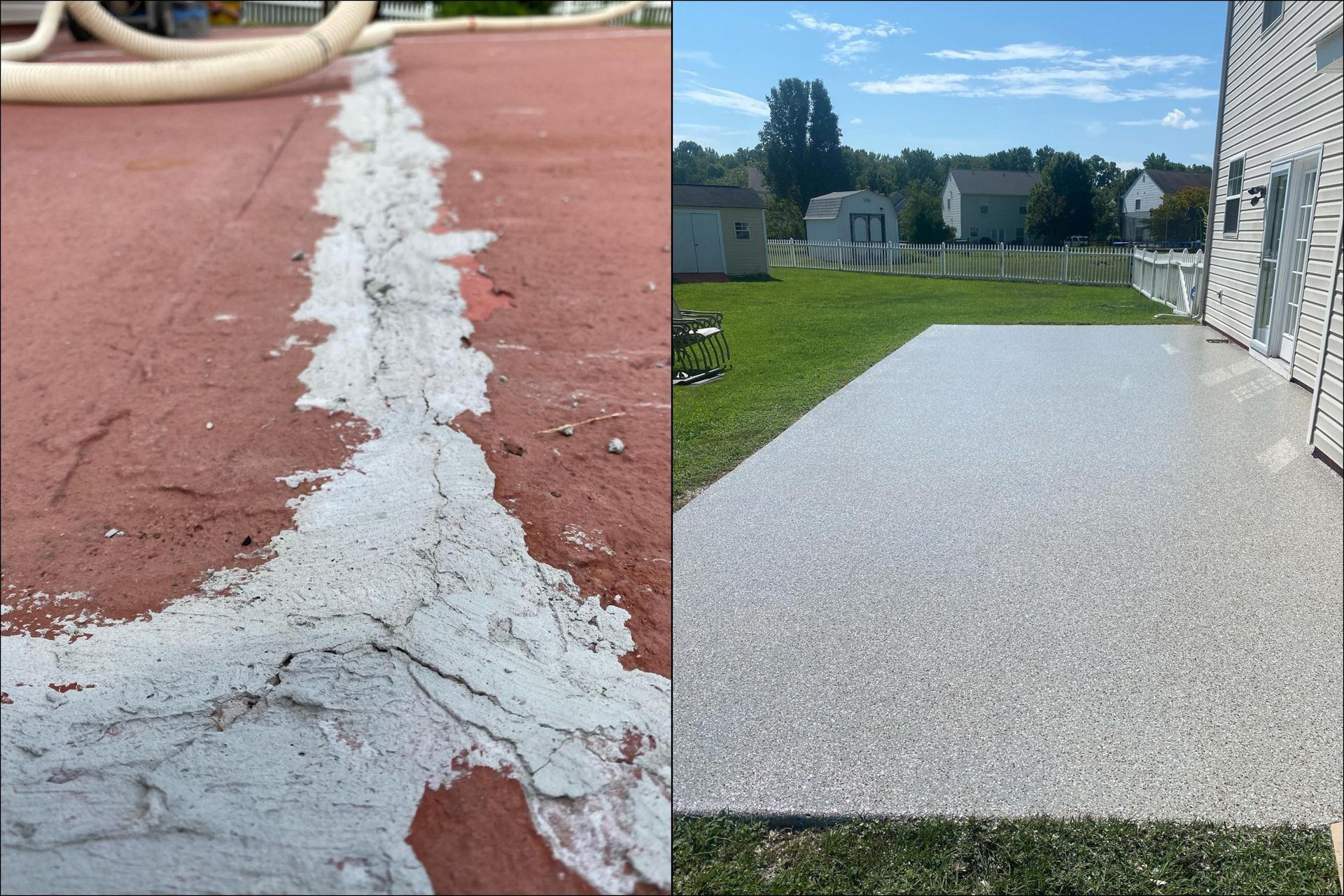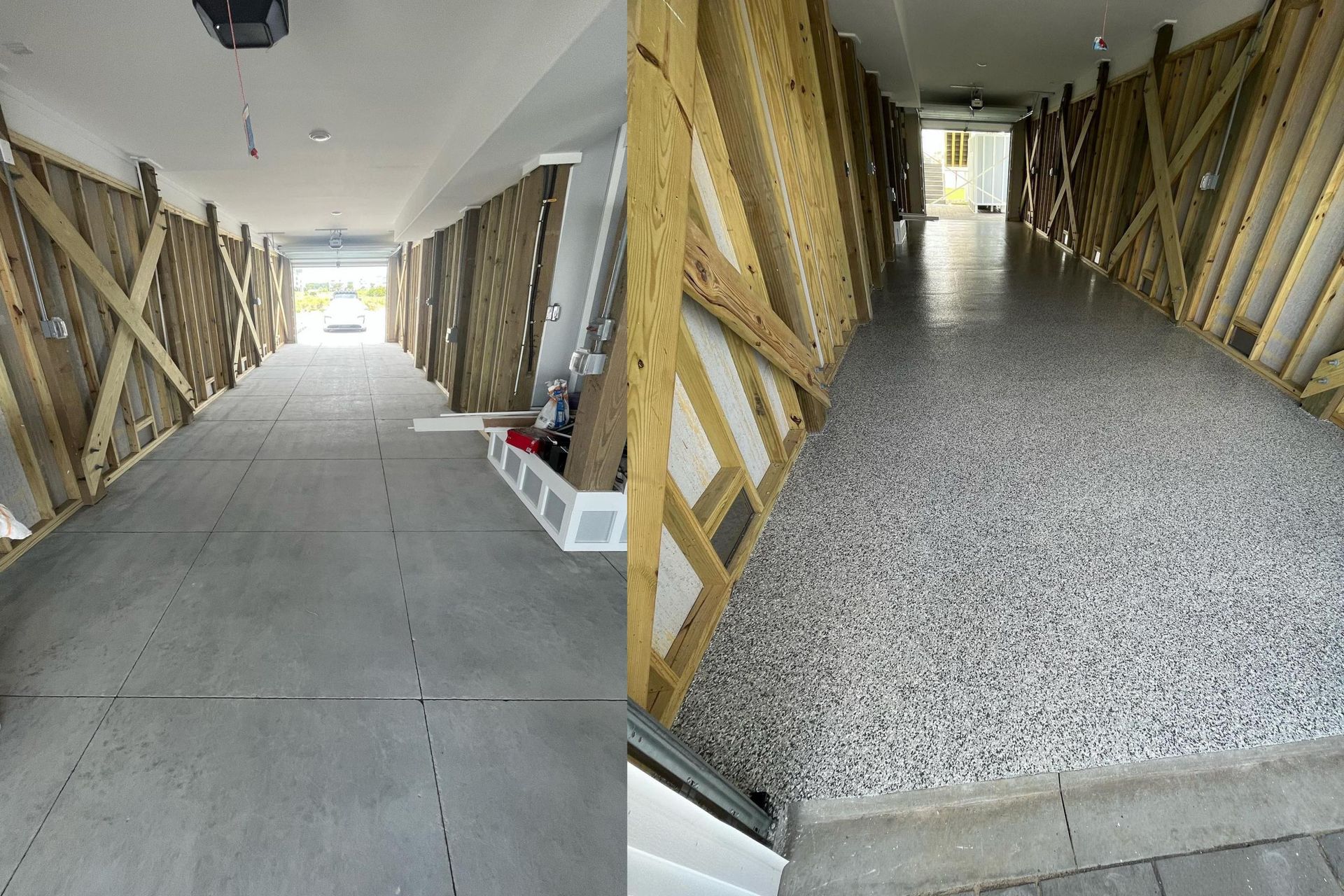
Why Garage Floors Turn Yellow (And How UV-Stable Polyaspartic Prevents It)
The truth about epoxy discoloration and how to choose a long-lasting garage floor coating
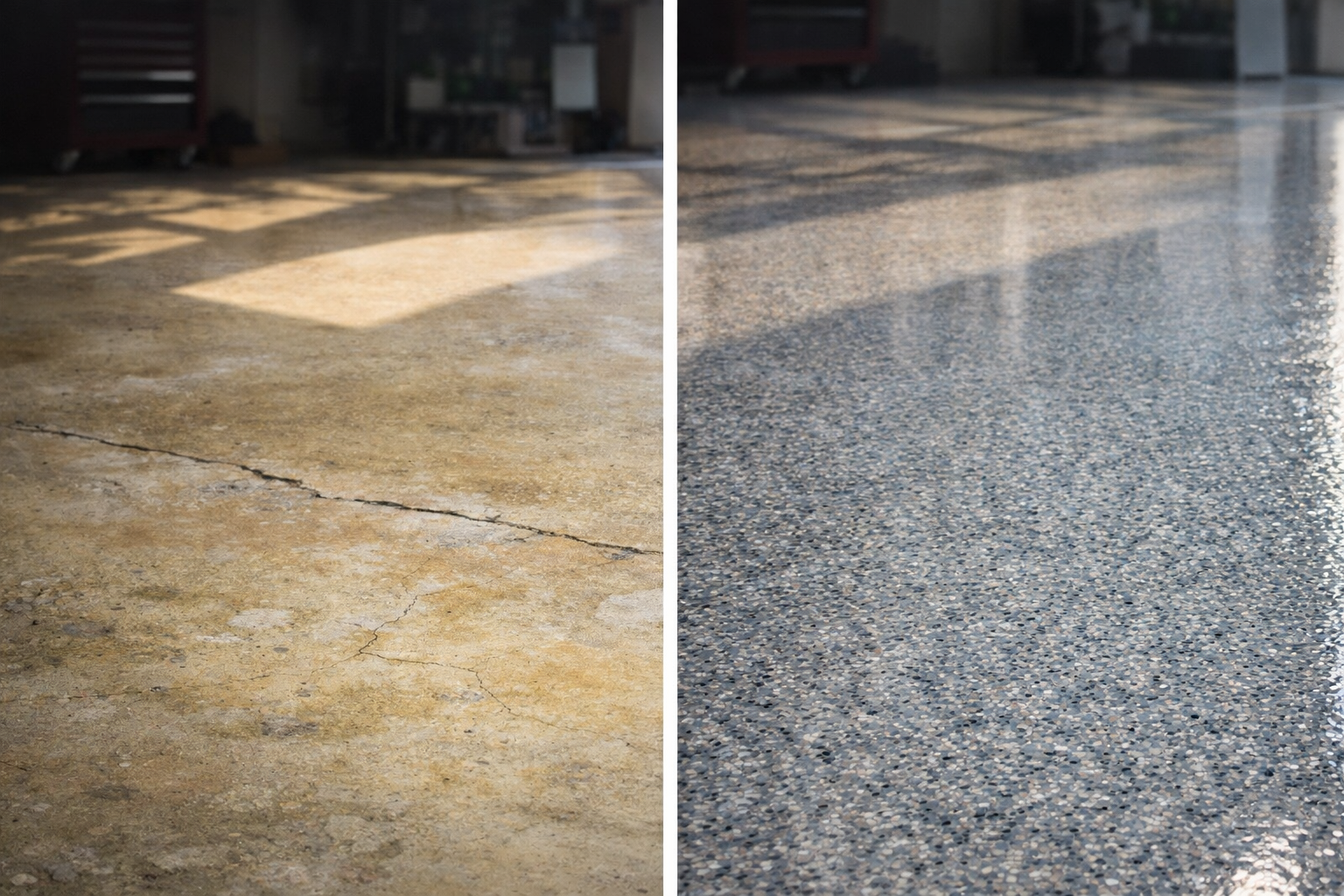
If you’ve ever seen a once-clean garage floor turn yellow over time, you’re not alone. It’s one of the most common complaints homeowners have after installing a traditional epoxy floor coating. The good news? This problem is completely preventable—if you choose the right system from the start.
In this article, we’ll break down why garage floors turn yellow, what most contractors don’t tell you about epoxy, and how UV-stable polyaspartic coatings offer a long-term solution.
What Causes Garage Floor Coatings to Yellow?
The main culprit behind yellowing floors is UV exposure. Standard epoxy coatings are not UV-stable, which means they react negatively when exposed to sunlight.
Here’s what happens:
- Sunlight enters your garage through doors or windows
- UV rays break down the chemical structure of epoxy
- The coating begins to discolor, fade, or develop a yellow tint
This process can start in just a few months—especially in areas that get direct sunlight, like near garage doors.
Why Epoxy Isn’t Always the Best Choice
Epoxy is often marketed as a durable and affordable solution, but it comes with limitations. While it performs well in controlled indoor environments, it struggles in spaces exposed to UV light.
Common issues with epoxy floor coatings:
- Yellowing and fading over time
- Loss of gloss and visual appeal
- Potential cracking or peeling if not properly maintained
For homeowners investing in a garage upgrade, these drawbacks can quickly turn into frustration.
The Solution: UV-Stable Polyaspartic Coatings
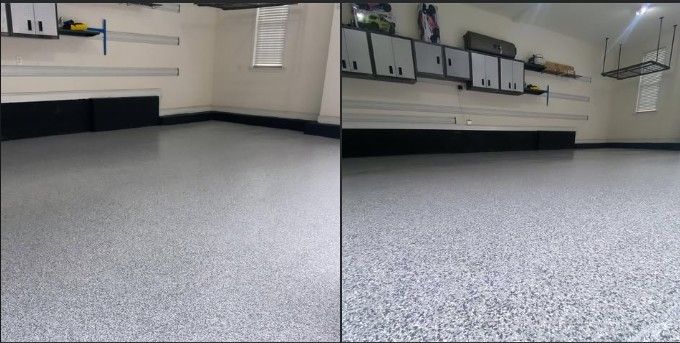
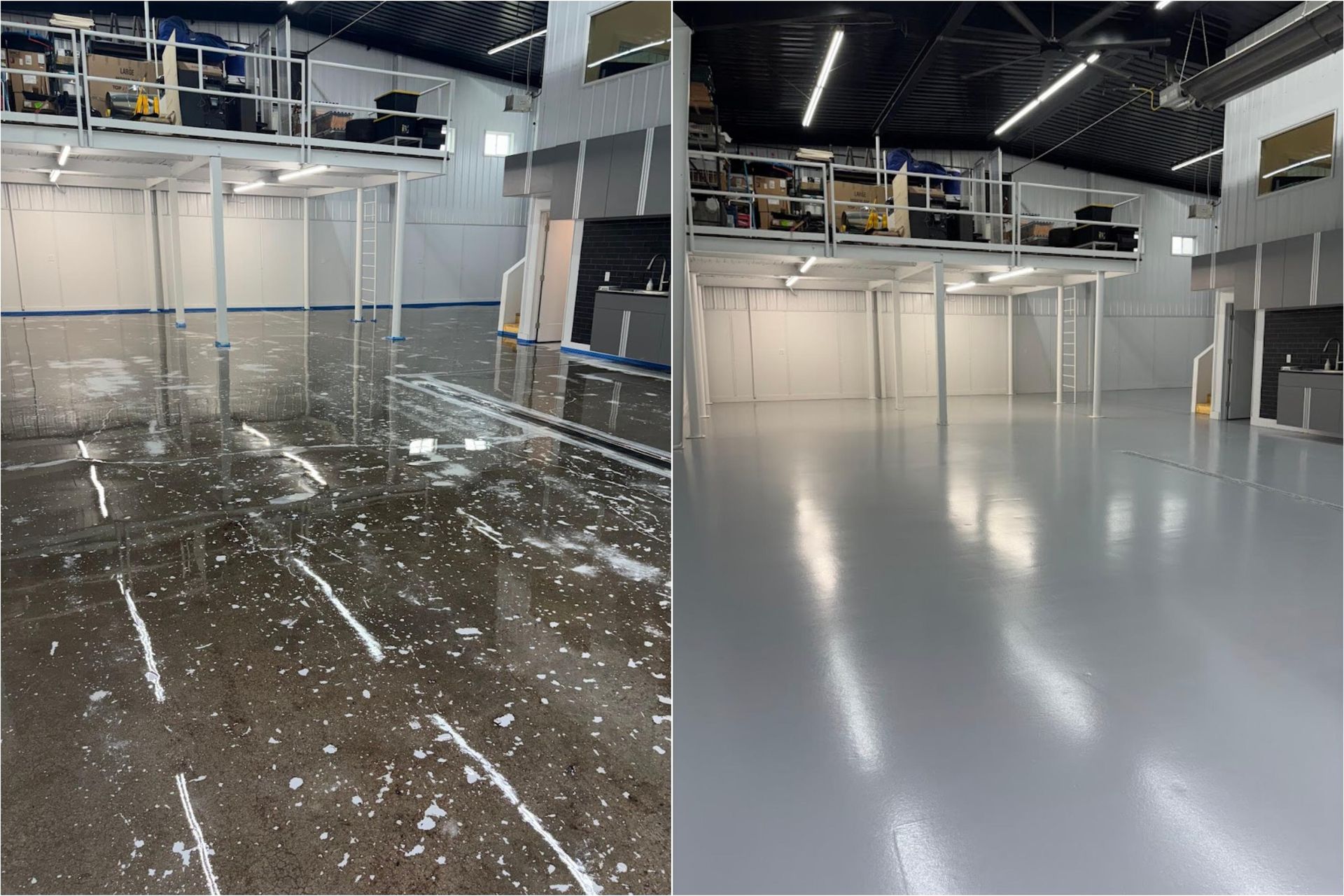
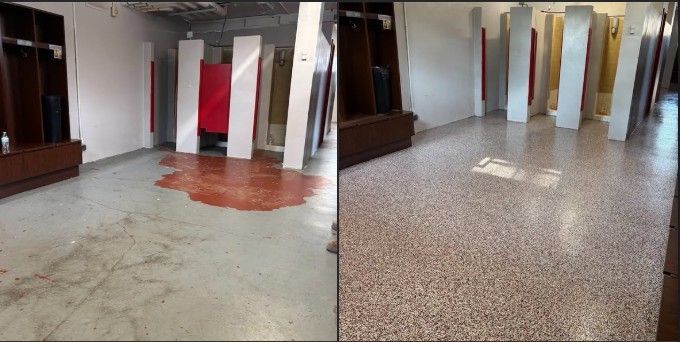
If you want a garage floor coating that won’t yellow, polyaspartic is the clear winner.
Polyaspartic coatings are specifically engineered to be UV-resistant, meaning they can handle sunlight exposure without breaking down or discoloring.
Key benefits of polyaspartic floor coatings:
- UV stability – no yellowing or fading
- Long-lasting gloss and color retention
- Faster installation times (often completed in 1–2 days)
- Superior durability for high-traffic use
This makes polyaspartic the preferred choice for modern garage floor systems, especially in sunny climates like Raleigh, NC.
Epoxy vs. Polyaspartic: What’s the Difference?
When comparing the two, the biggest difference comes down to performance over time.
- Epoxy: Lower upfront cost, but prone to yellowing and wear
- Polyaspartic: Higher performance, UV-stable, and built to last
If long-term results matter to you, polyaspartic delivers better value.
Choosing the Right Garage Floor Coating in Raleigh, NC
When searching for garage floor coating in Raleigh, NC, it’s important to look beyond price and focus on the system being used. Not all coatings are created equal.
Ask your contractor:
- Is the topcoat UV-stable?
- How will this hold up in direct sunlight?
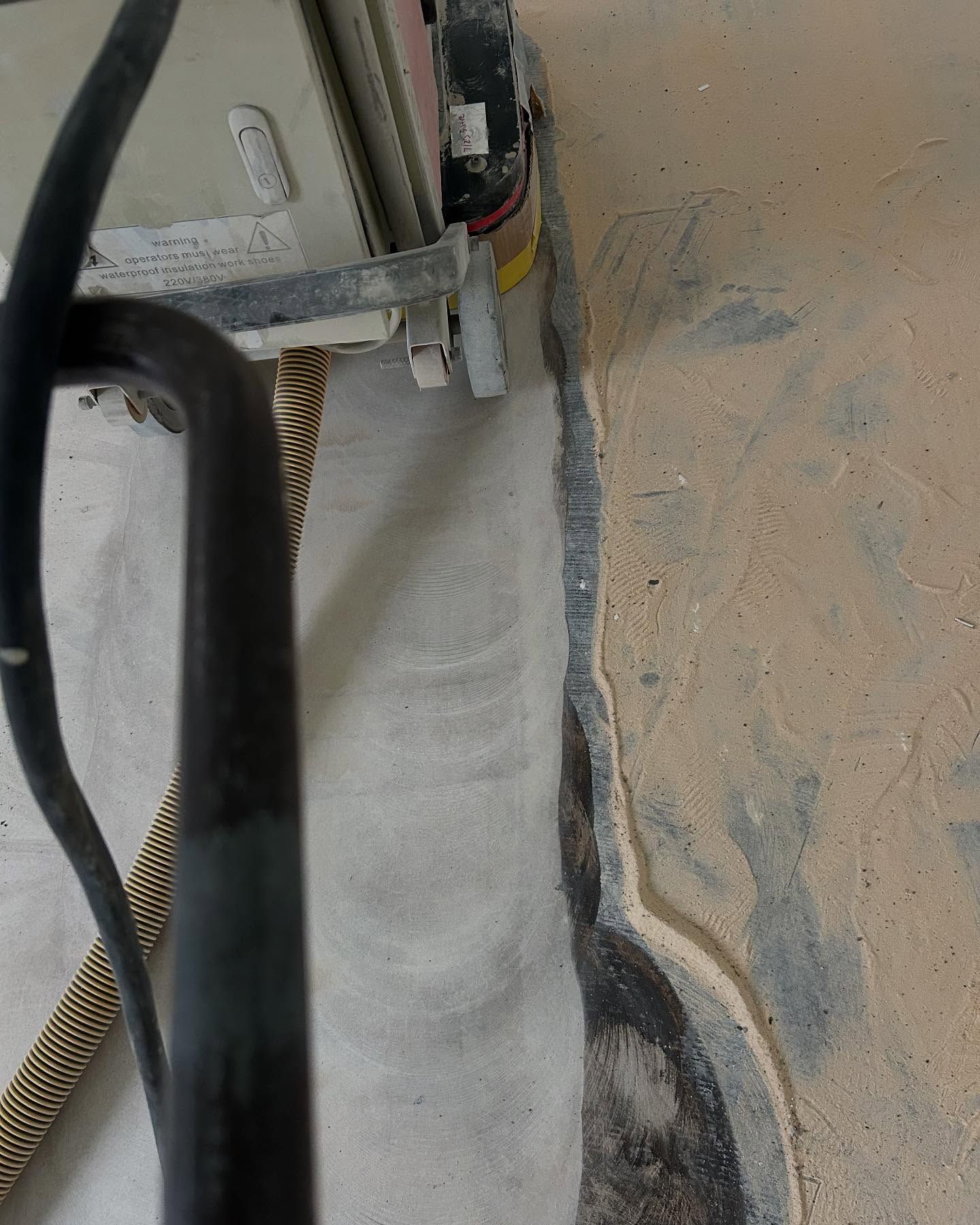
- What prep work is included?
These questions can save you from costly mistakes.
Final Thoughts: Invest in a Floor That Lasts
Your garage floor shouldn’t look great for just a few months—it should last for years. By choosing a UV-stable polyaspartic coating, you’re investing in durability, appearance, and long-term performance.
👉
Ready to upgrade your garage floor?
Contact us today for a free quote and see the difference a professional-grade coating can make.