Polished Concrete Care: How to Protect Performance, Appearance, and Longevity
A practical guide to maintaining polished concrete floors in commercial and industrial spaces
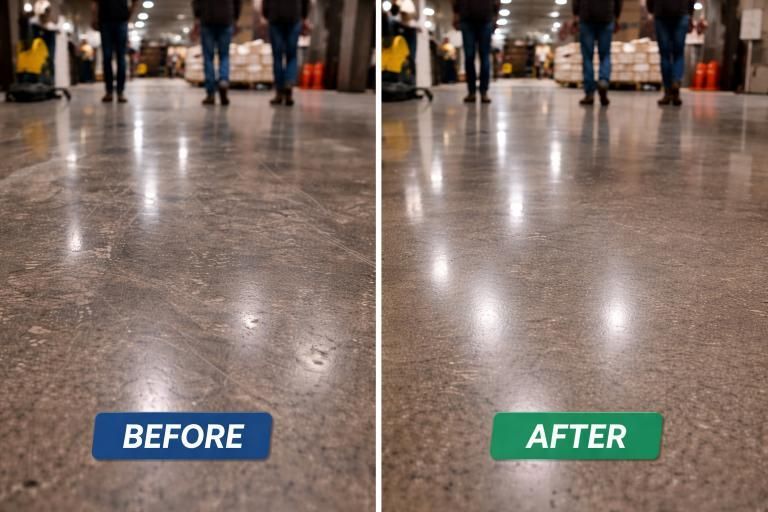
Polished concrete floors are widely used in warehouses, retail spaces, offices, and mixed-use facilities because of their durability, clean appearance, and low lifecycle cost. However, while polished concrete is often described as “low maintenance,” it is not maintenance-free. Proper polished concrete care is essential to preserve shine, control dusting, and extend the life of the slab.
This guide explains what polished concrete care involves, why it matters, and how property owners and facility managers can avoid costly mistakes.
Why Polished Concrete Care Matters
Polished concrete is a mechanically refined surface. The polishing process densifies the concrete, closes pores, and creates a smooth, reflective finish. Without proper care, that surface can degrade over time.
Poor maintenance can lead to:
- Loss of gloss and clarity
- Increased slip risk from improper cleaners
- Surface scratching and swirl marks
- Dusting from breakdown of the concrete matrix
- Premature need for re-polishing or restoration
A consistent maintenance strategy protects both the appearance and structural integrity of the floor.
Best Practices for Polished Concrete Floor Care
1. Use the Right Cleaning Products
Harsh or acidic cleaners can dull polished concrete and break down densifiers. Always use pH-neutral cleaners specifically designed for polished concrete floors.
Avoid:
- Degreasers not approved for polished surfaces
- Vinegar or acidic solutions
- High-alkaline cleaners unless professionally specified
2. Choose Proper Cleaning Equipment
Incorrect pads and brushes are one of the most common causes of swirl marks and uneven sheen.
Recommended equipment includes:
- Auto scrubbers with non-abrasive pads
- Soft microfiber mops for light cleaning
- Clean, well-maintained pads to avoid grit transfer
3. Maintain a Regular Cleaning Schedule
Traffic levels should dictate cleaning frequency.
- High-traffic facilities: Daily or multiple times per week
- Moderate traffic: Weekly or biweekly
- Low traffic: Scheduled cleaning with periodic inspections
Consistent cleaning prevents grit buildup that can act like sandpaper under foot traffic.
Periodic Maintenance and Restoration
Over time, even well-maintained polished concrete may benefit from burnishing or re-polishing to restore gloss and slip resistance. These services are significantly more cost-effective than full surface replacement and help maintain a professional appearance across commercial properties.
Common Polished Concrete Care Mistakes
- Assuming the floor does not require maintenance
- Using janitorial products meant for tile or vinyl
- Allowing dirt and grit to accumulate at entrances
- Skipping professional inspections
Avoiding these mistakes can add years of performance to your floors.
Long-Term Value of Proper Polished Concrete Care
When polished concrete floors are cared for correctly, they:
- Maintain consistent appearance across large areas
- Reduce dust and airborne particles
- Lower long-term maintenance and repair costs
- Support safer, cleaner work environments
For commercial and industrial properties, polished concrete care is not an expense—it’s an investment in asset longevity.
Get Expert Help with Polished Concrete Care
If you manage or own a facility with polished concrete floors, having a clear care plan makes all the difference. United Floor Coatings – Raleigh helps property owners, facility managers, and construction professionals protect their concrete investments with expert guidance and long-lasting solutions.
Contact our team today to discuss polished concrete care strategies or request a free estimate.